
01
Login
Enter in seconds with Apple or Google. The first screen sets the product tone before the portfolio ever appears.
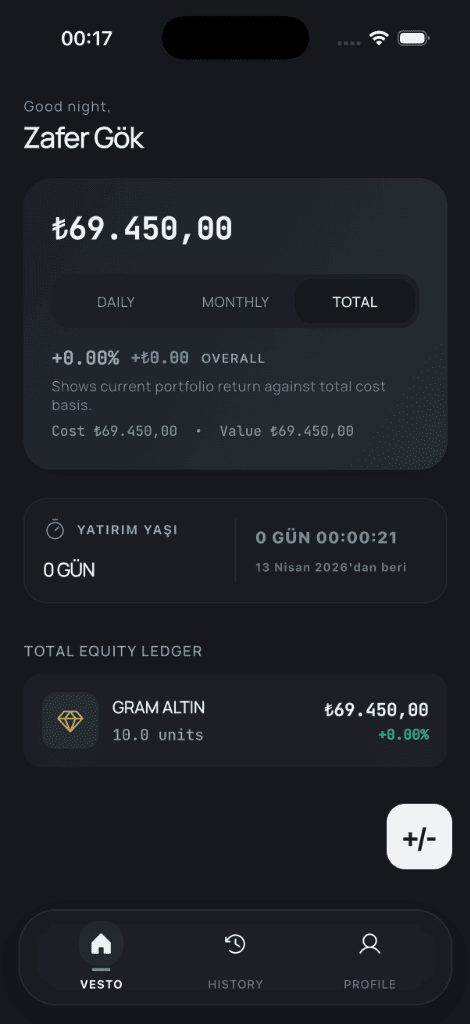
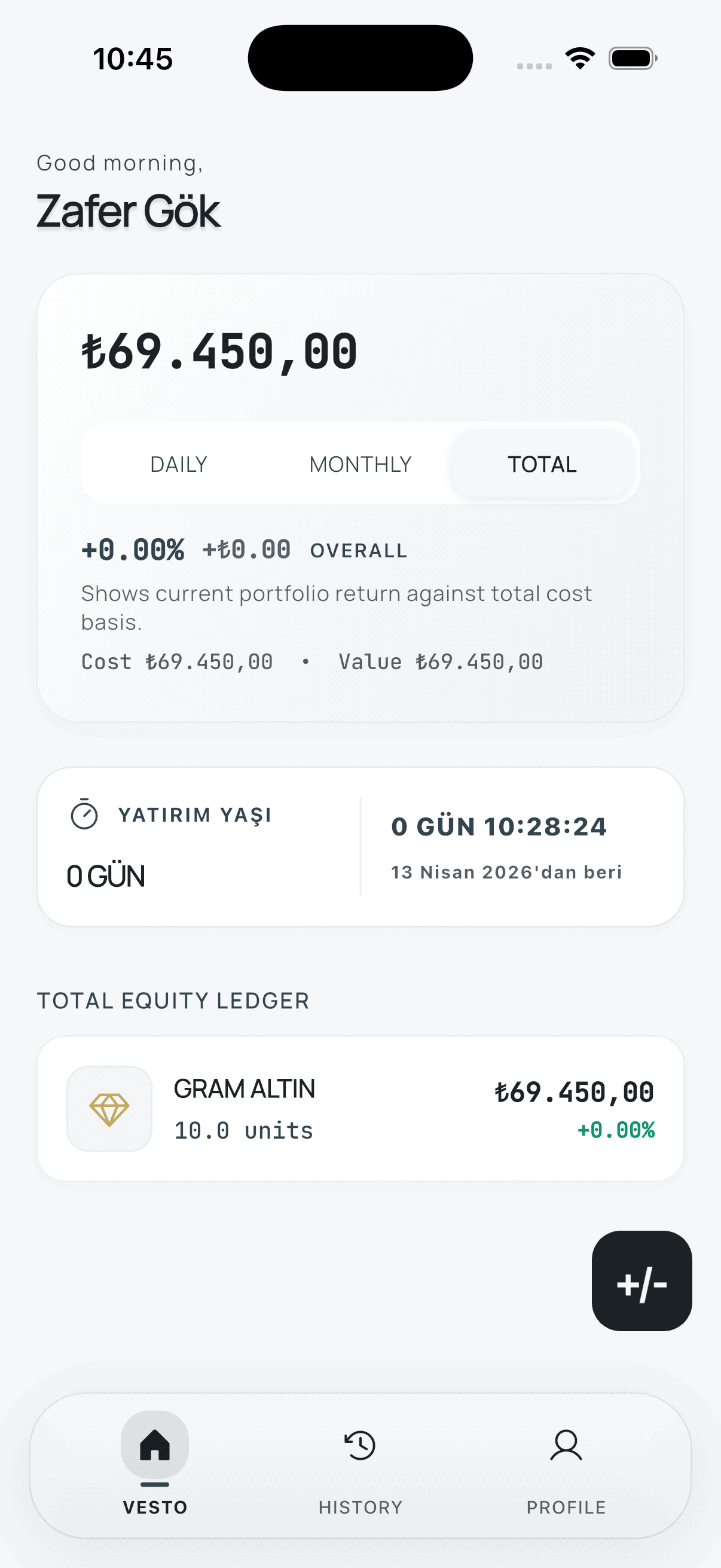
Vesto is an asset tracking app for cash, gold, jewelry, crypto, and stock positions. It brings those holdings into one portfolio view so users can see total value, cost basis, profit/loss, and history in one place.
App purpose
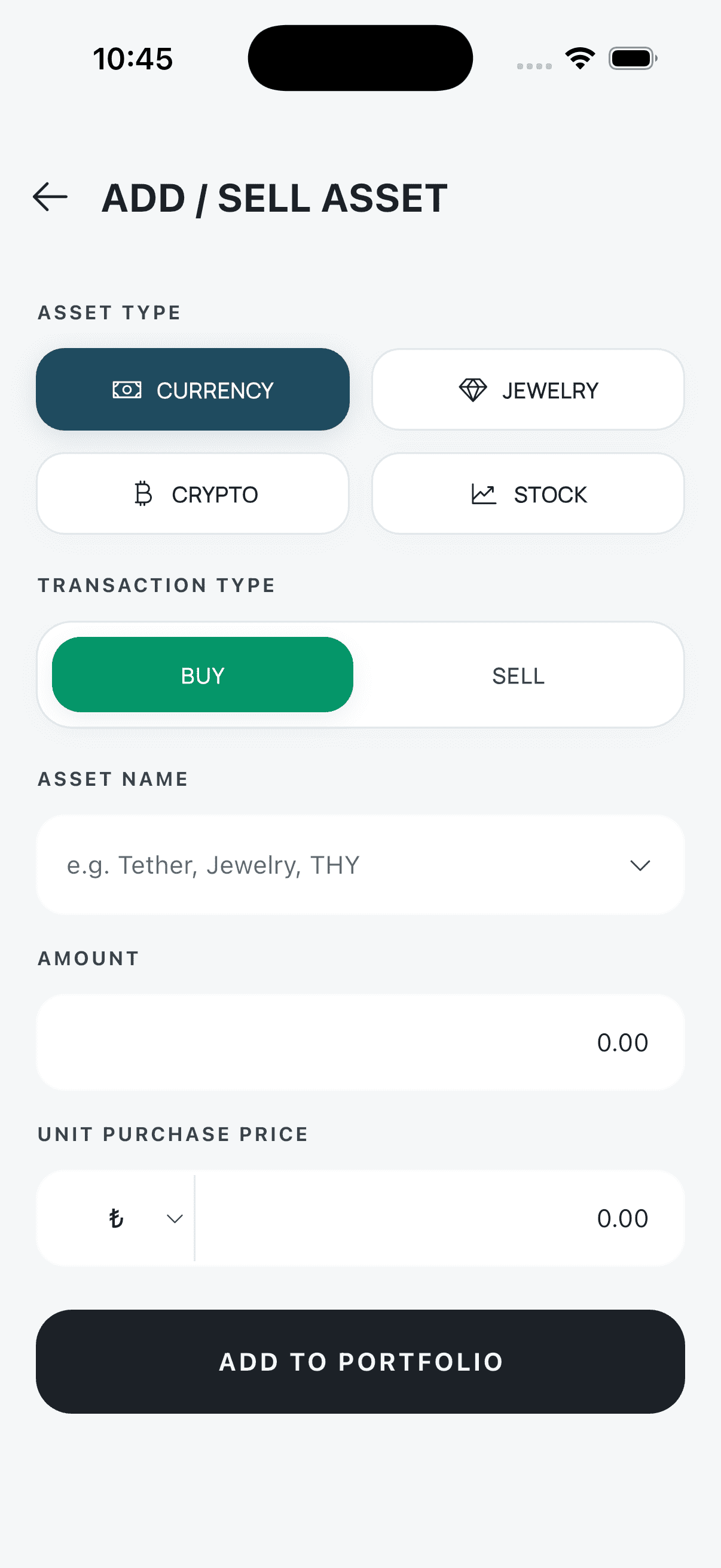
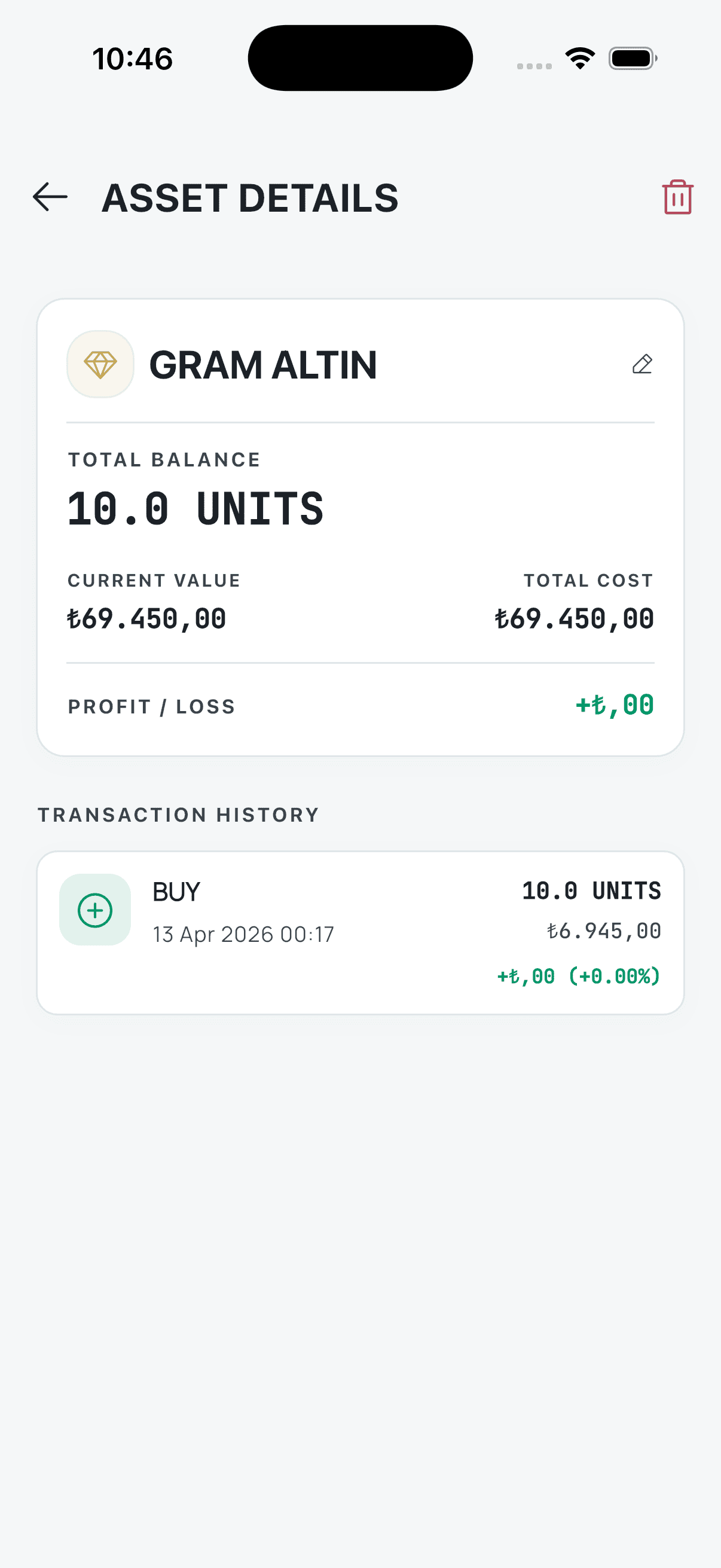
Vesto helps users track personal assets including cash, gold, jewelry, cryptocurrency, and stock positions in a single portfolio view with transaction history, manual price updates, cost basis, total value, and profit/loss.
Google Sign-In is used in the mobile app only for account authentication. Vesto uses basic account information to identify the user account and keep portfolio records connected to that account.
Why Vesto Exists
Vesto is intentionally simple. It does one job well: bring fragmented savings into a practical operating view without pushing users into a heavy finance product.
A little cash at home, some gold, a crypto wallet, and a few stock positions rarely sit in one readable place.
When live data is delayed or unavailable, portfolio visibility breaks. Vesto keeps users in control with manual price updates.
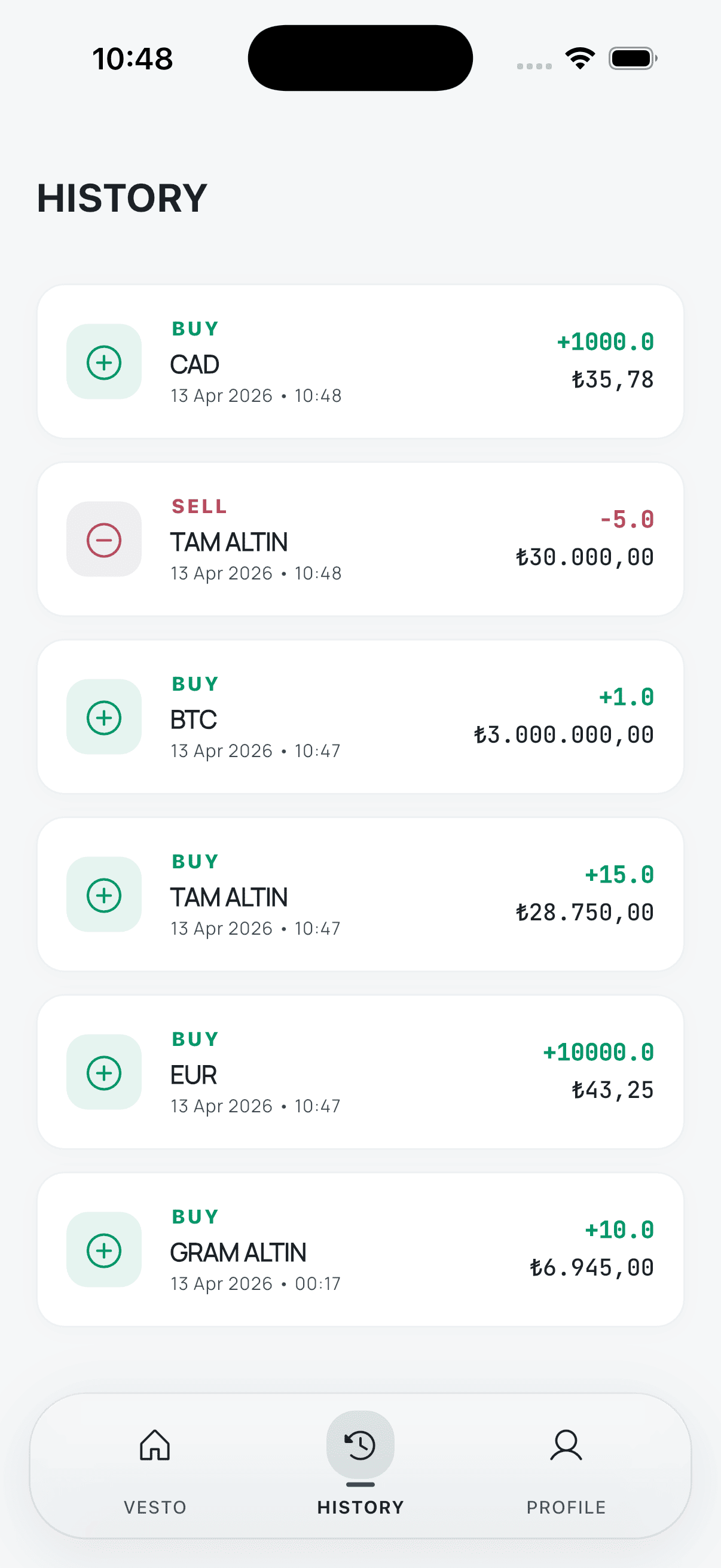
Without a proper trail, users lose the story behind each buy, sell, and price change.
Portfolio data should not disappear inside a tool. Vesto is built so records can leave cleanly.
How It Works
Once the frame reaches center, the sequence pins and opens the product one screen at a time: sign in, read the portfolio, add an asset, inspect the detail view, review history, open the profile, then adjust settings.
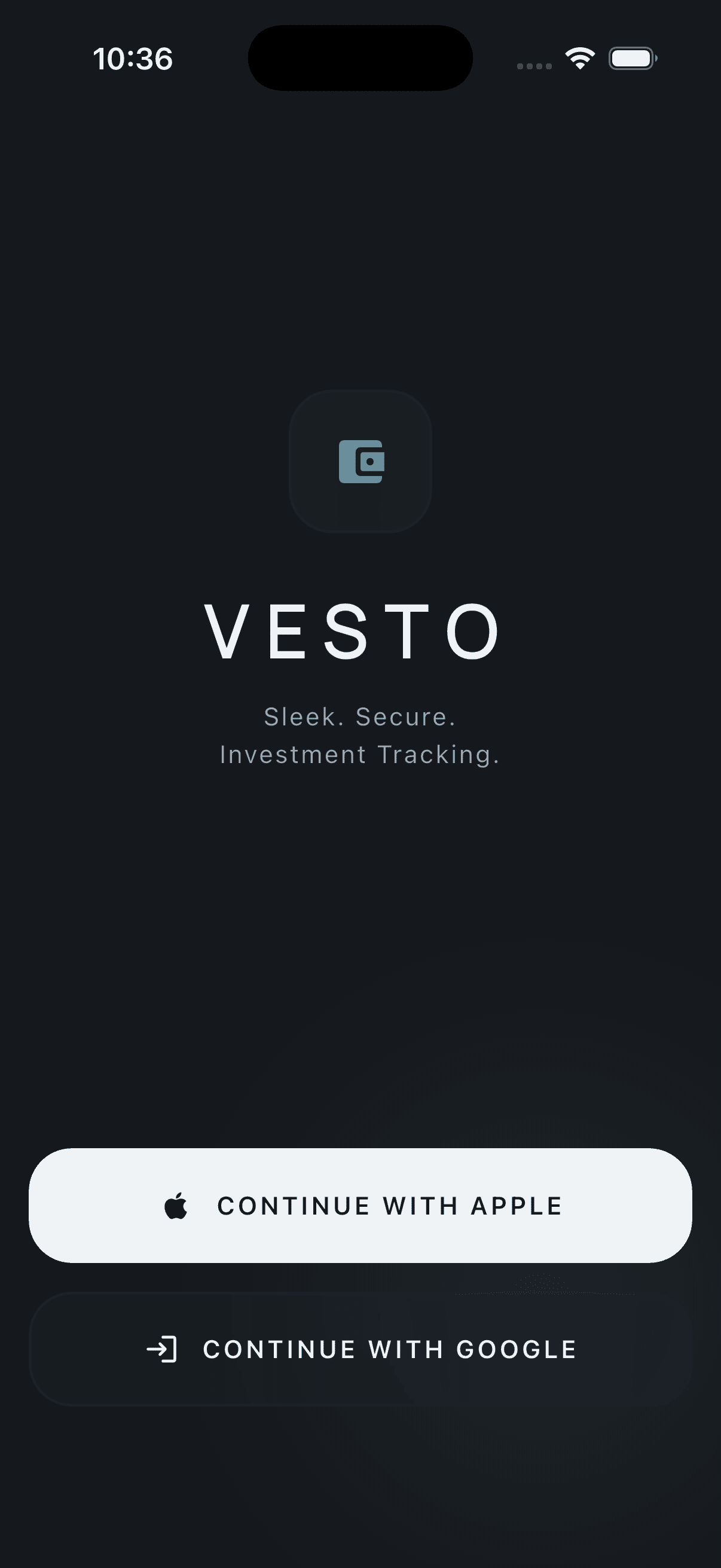
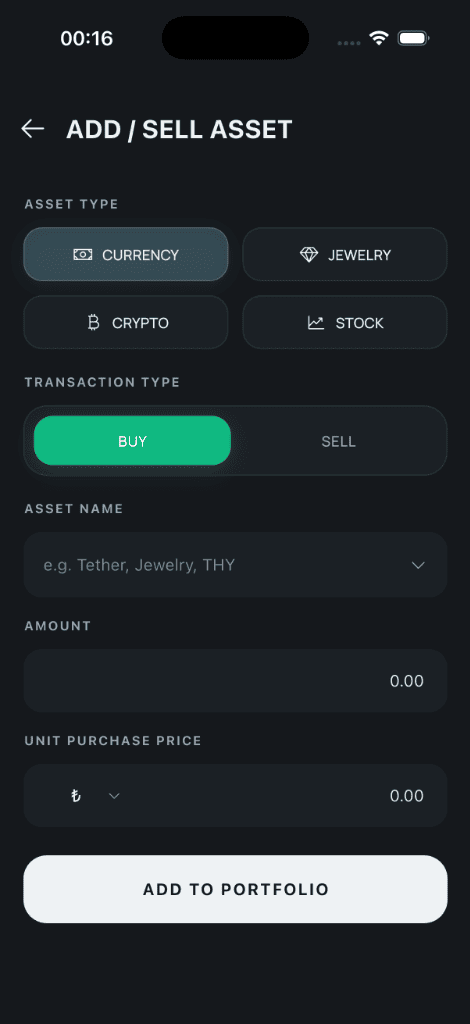
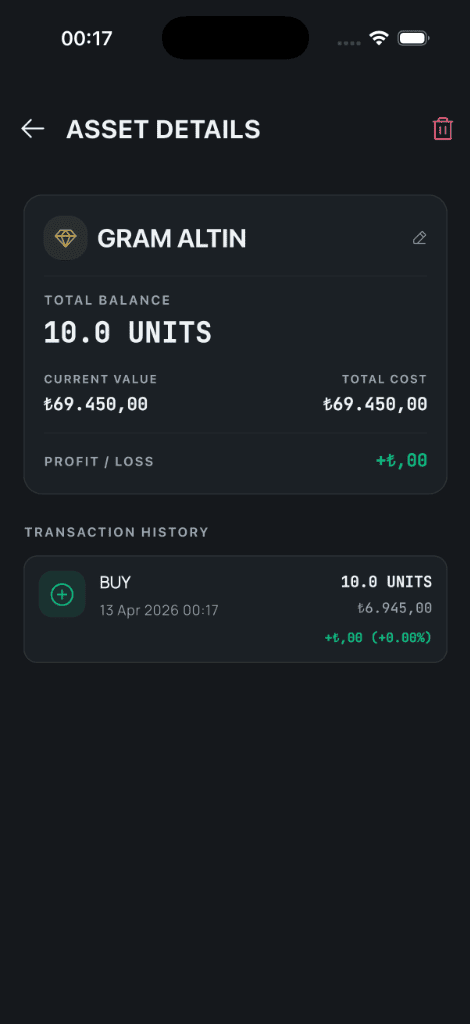
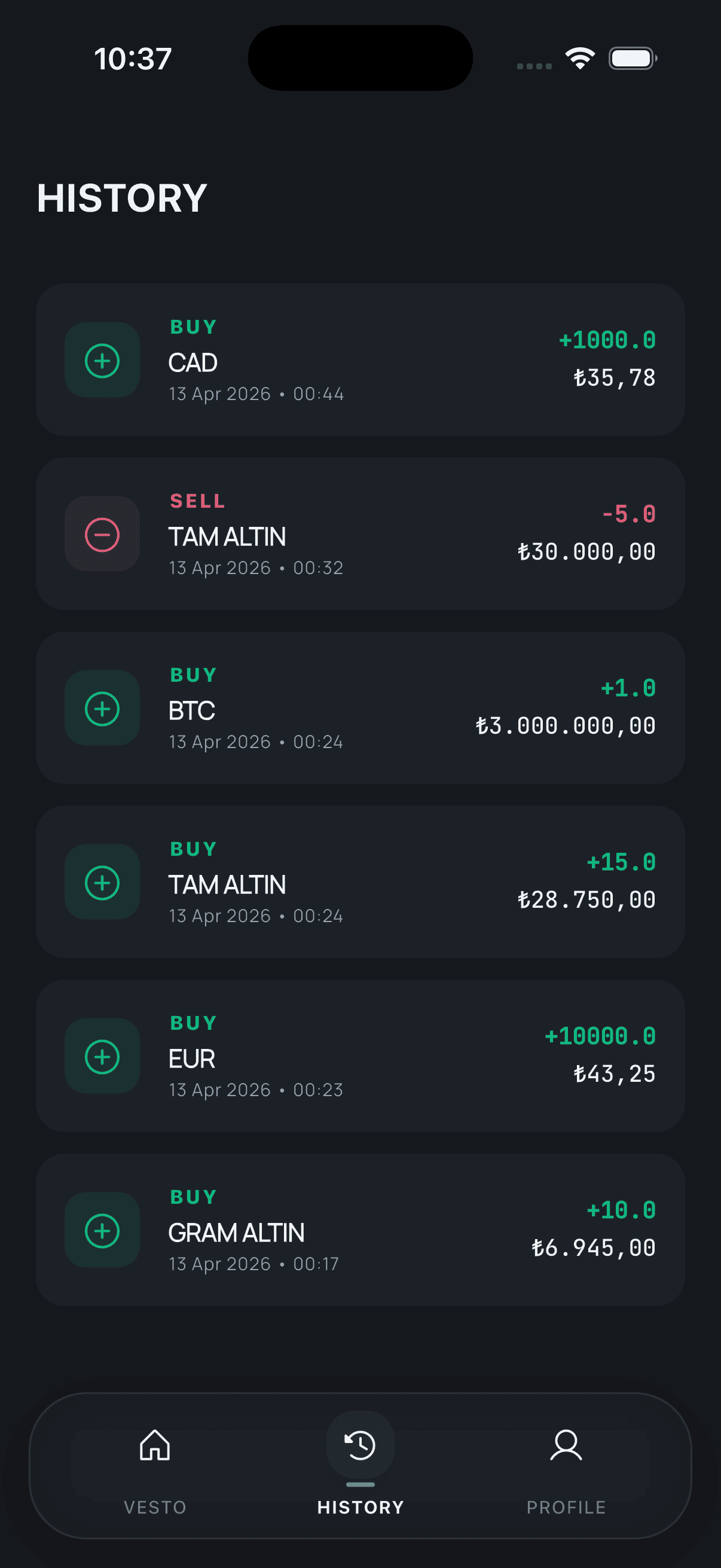
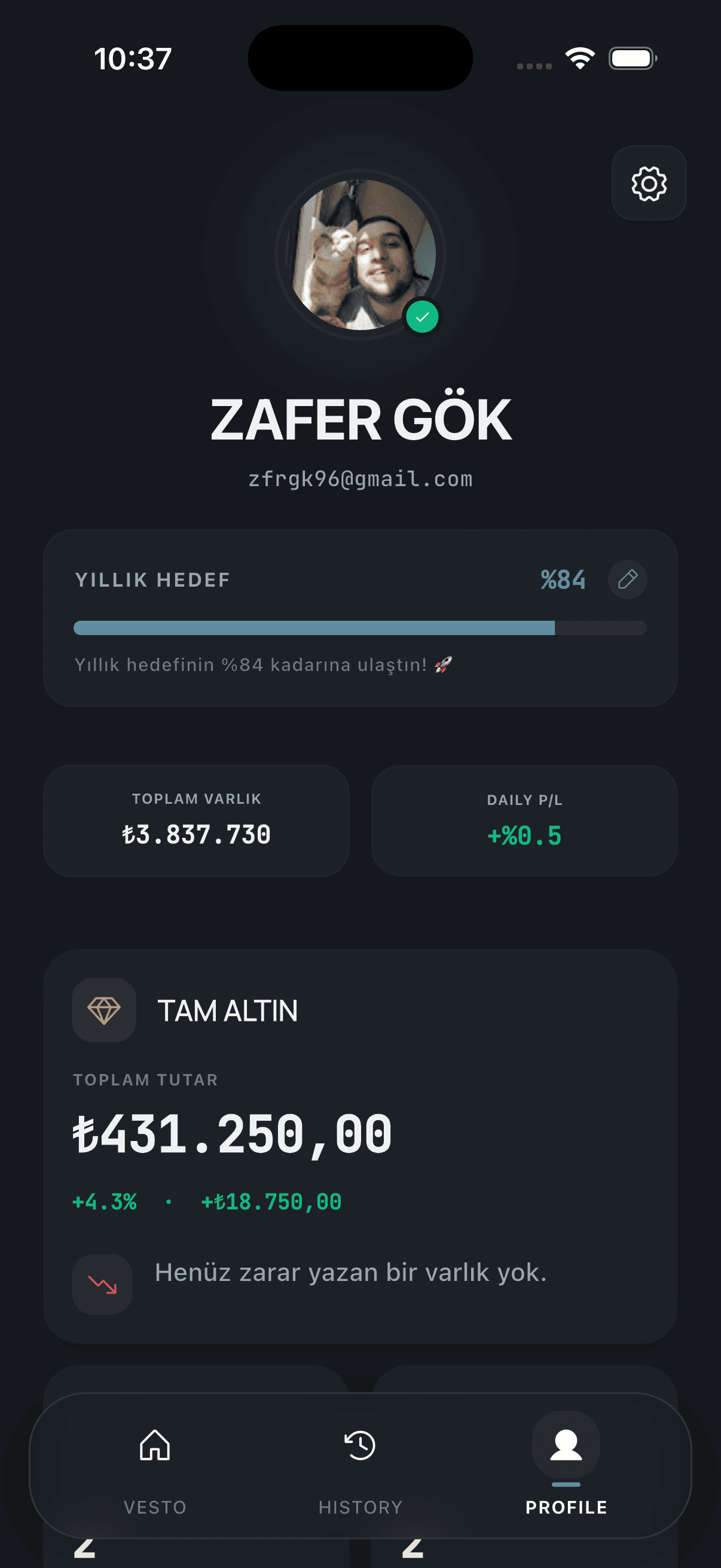
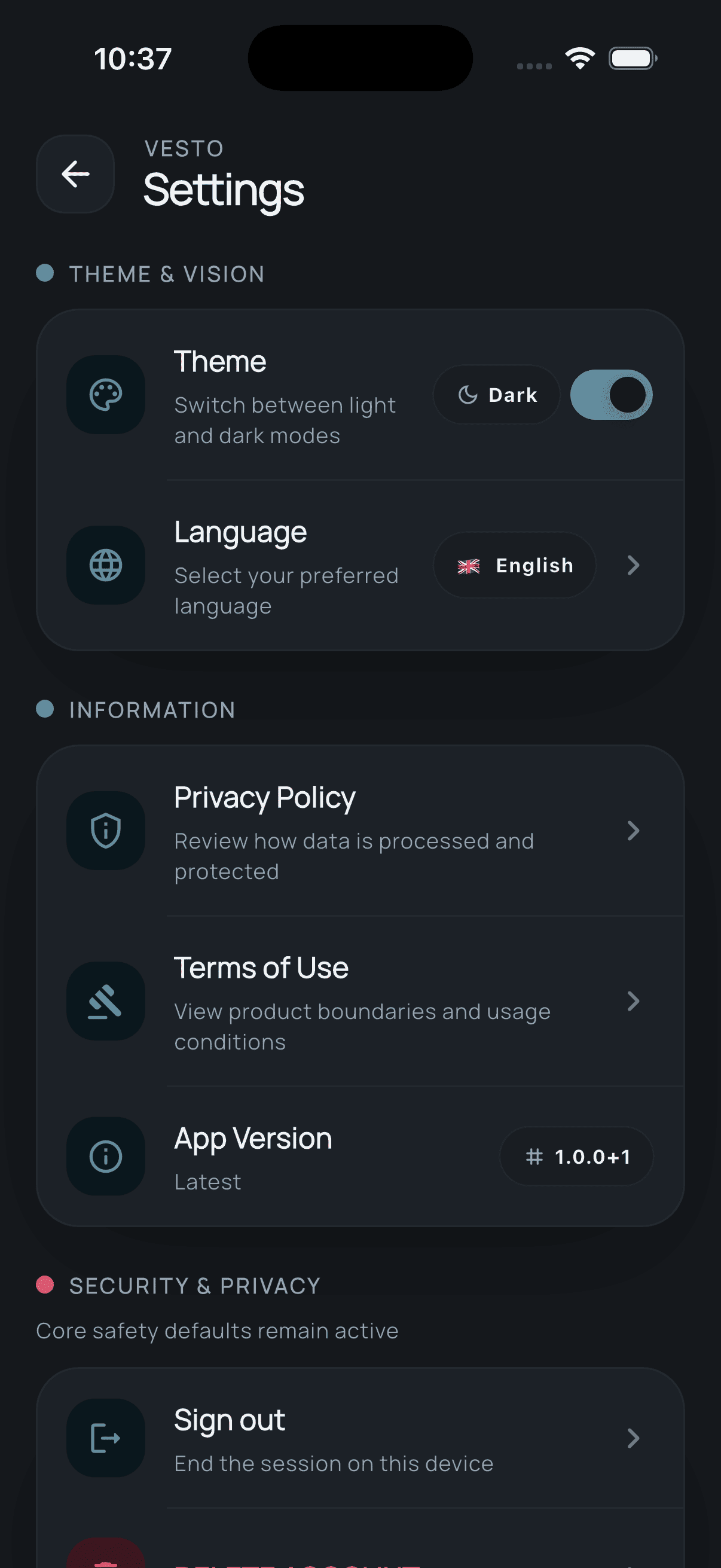
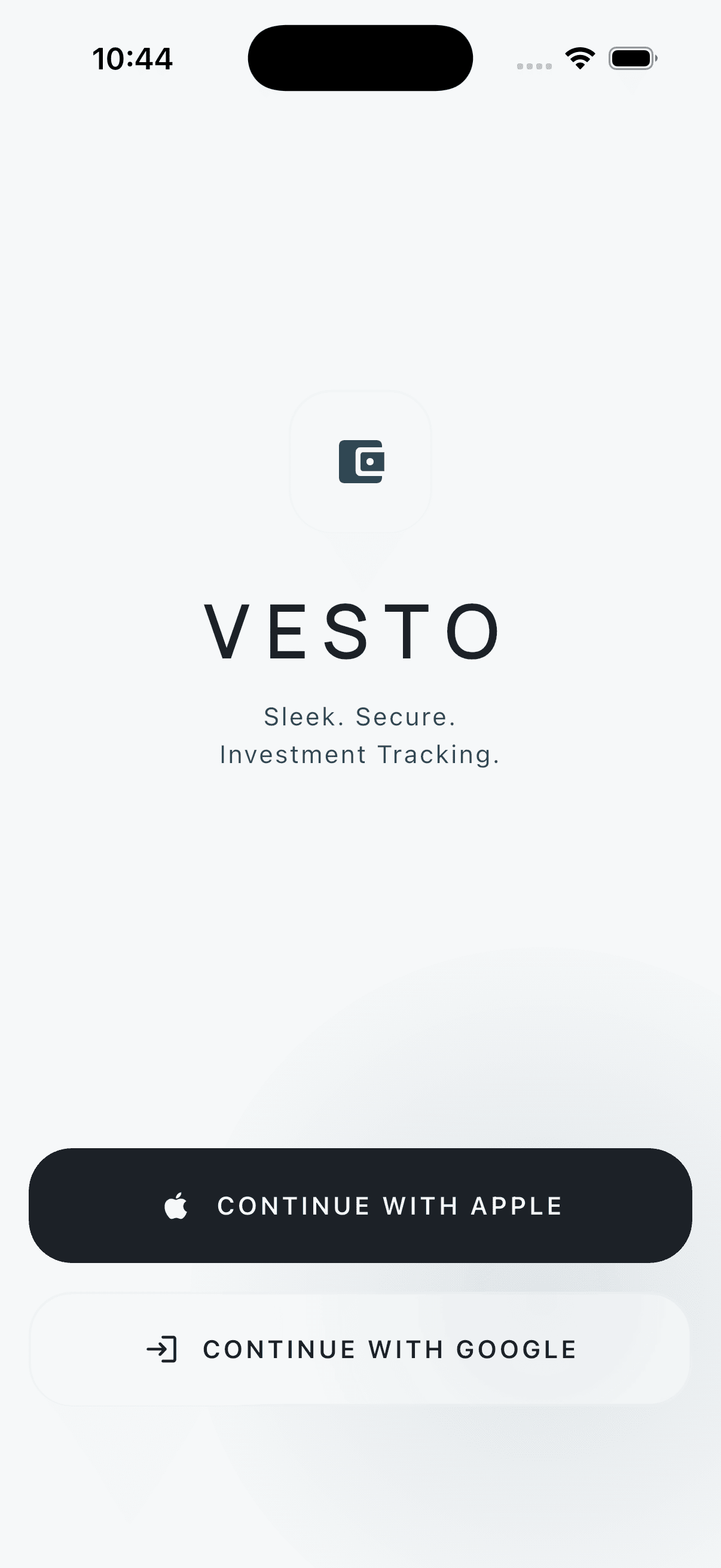
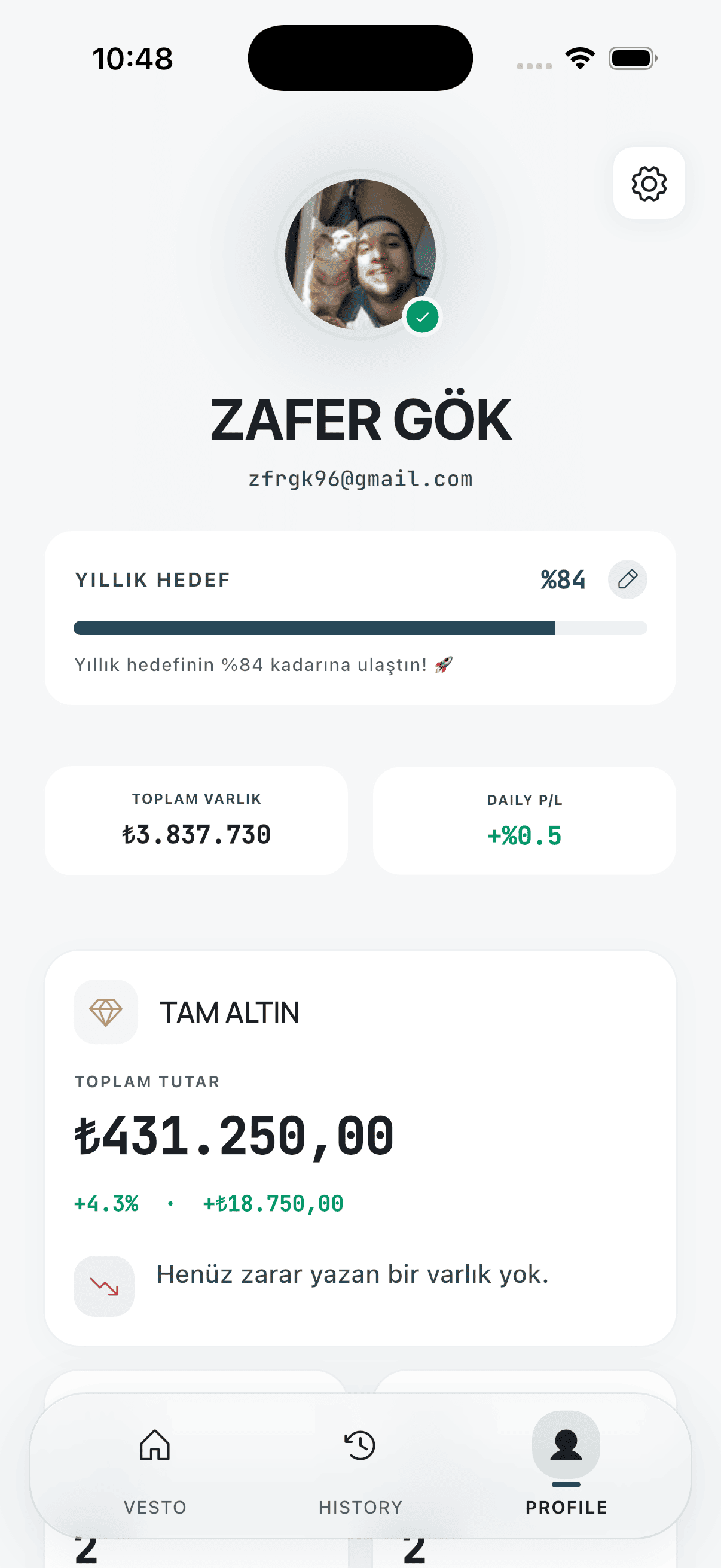
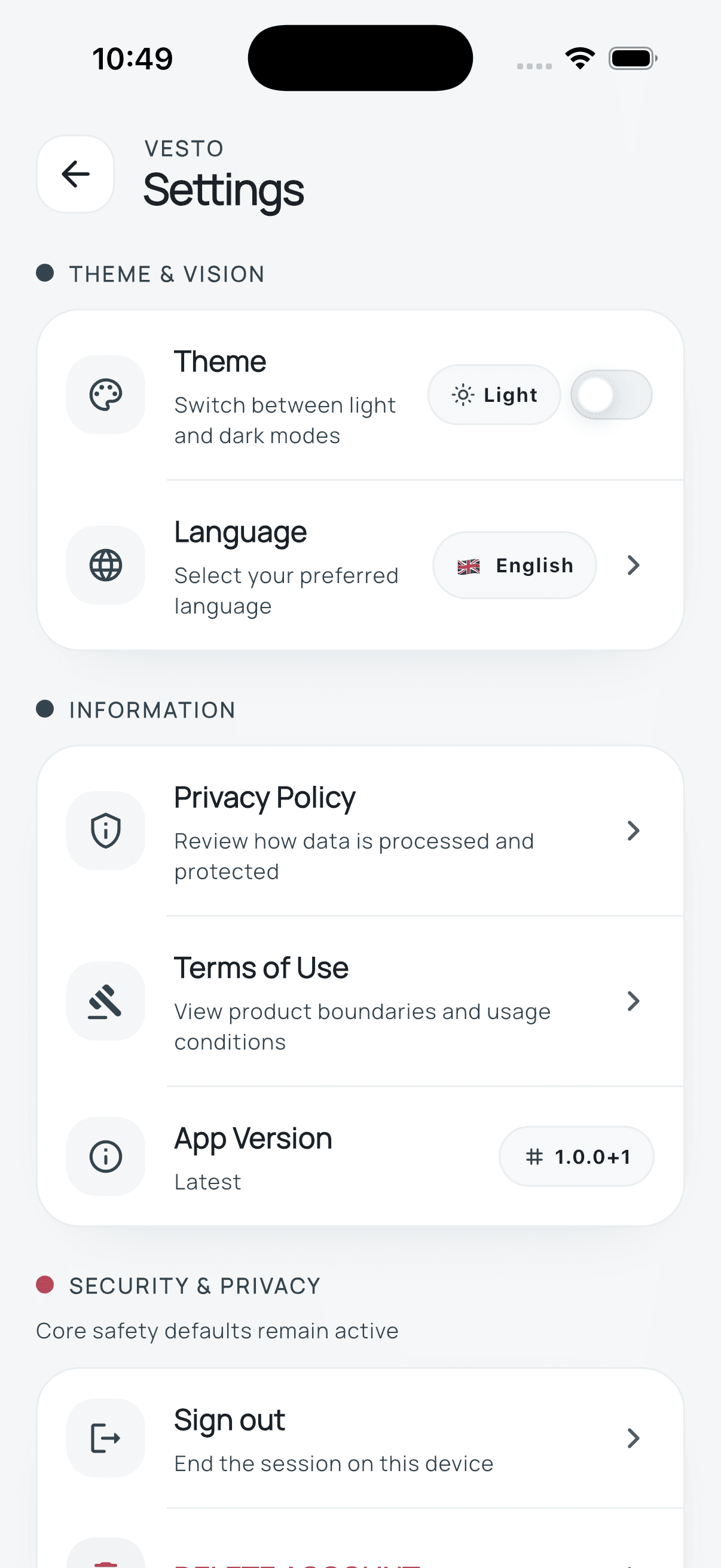
Enter in seconds with Apple or Google. The first screen sets the product tone before the portfolio ever appears.
Operational Trust
The product stays lightweight for users while preserving the behaviors that make the data reliable enough to revisit.
Buys, sells, and price updates form a readable audit trail instead of disappearing into a moving number.
When market data is incomplete, users are still able to keep the portfolio current.
Portfolio and transaction data can leave the product as structured files when needed.
The story stays centered on making savings readable instead of pointing users toward internal operational paths.